
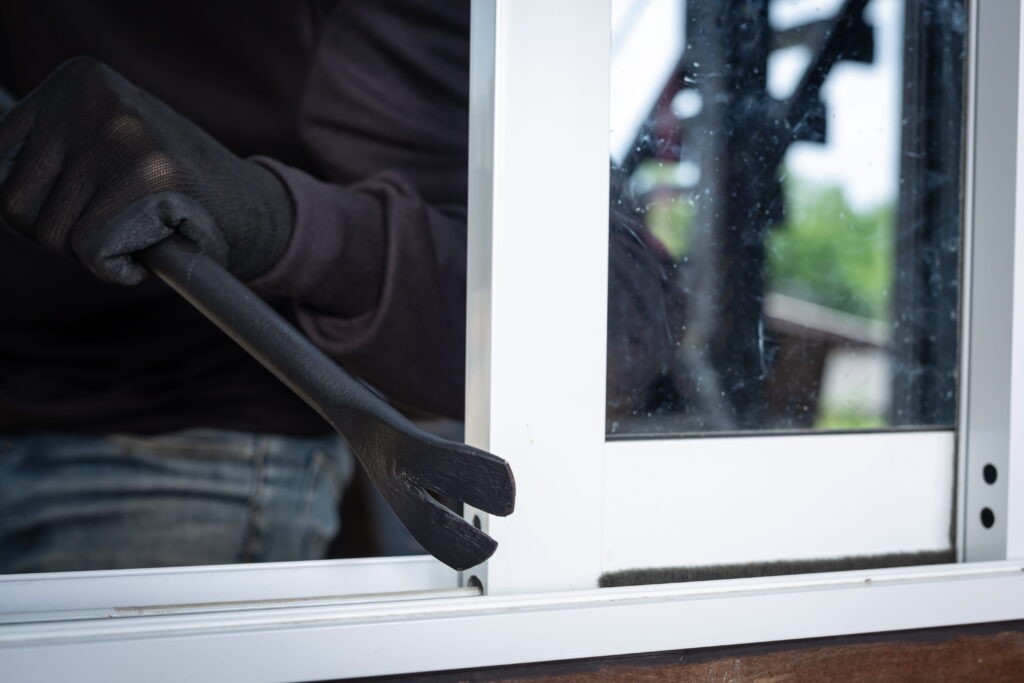
A break and enter charge exposes you to imprisonment for life when the place entered was a dwelling-house. Section 348 of the Criminal Code does not require a smashed window or a forced lock. Turning an unlocked handle is enough. A conviction carries jail exposure and a criminal record that follows you through employment screening, travel and immigration.
Frouhar Law defends breaking and entering charges at the Ottawa Courthouse on Elgin Street, in Brockville and across Eastern Ontario. Mash Frouhar prosecuted as an Assistant Crown Attorney before she began defending, so she reads a break and enter brief the way the Crown assembled it.
A break and enter offence joins two elements:
The Crown need not prove that anything was taken. A person who entered a garage on private property and left empty-handed still faces the break and enter charge if the intent existed at the threshold.
Trespass alone is not break and enter. Most Ontario prosecutions name theft as the intended indictable offence, so honest belief and ownership carry weight.
Section 348(1) of the Criminal Code creates three routes to liability, and the branch named in your information changes what the Crown must establish at trial.
Someone who entered through an open loading door, then forced a locked exit, has committed break and enter although the entry was lawful. Read the charging document closely before the first appearance. An overcharged break and enter information can be pared back long before any guilty plea is discussed.
Section 321 of the Criminal Code of Canada defines break as opening anything used to close an opening. Nothing needs to be damaged. Section 350 then deems certain entries to be breaking and entering even when nothing was opened: entry obtained by threat, by artifice, or by collusion with a person inside, and entry made without lawful justification or lawful excuse through any permanent or temporary opening.
A person has entered as soon as any part of the body, or any instrument, crosses the threshold. A hand through a window frame completes the entry into the place. Breaking in, in the statutory sense, needs no force at all.
The Crown must prove an entry meeting these definitions plus the intent to commit an indictable offence, and the gap between presence and proof is where many break and enter prosecutions come apart.
Section 348(3) of the Criminal Code defines the places that can be broken into:
A construction trailer qualifies as a place. So does a moored vessel.
Which place it was drives the break and enter penalty that follows. The same opened door produces a hybrid offence with a ten-year maximum sentence at a warehouse, and a straight indictable offence carrying imprisonment for life at an apartment.
Under section 348(1)(d), break and enter of a dwelling-house is indictable only, and the maximum sentence is life imprisonment. Section 2 defines a dwelling-house as a building or part of one occupied as a permanent or temporary residence, including a garage inside the curtilage and a mobile unit. Cottages, condominium units and occupied trailers qualify. A detached shed usually does not.
Whether the place met that definition on the date alleged is a live question. Vacant properties and units under renovation sit on that line. Section 348.1 adds a layer: where occupants were present, the accused knew or was reckless about it, and violence followed, their presence becomes one of the aggravating factors at sentencing. That is the fact pattern the Crown charges as a home invasion.
Call 613.238.2000 for a free consultation. Our 24-hour line answers arrests and bail hearing matters after the Ottawa court process closes for the day.
Intent is the element a prosecutor cannot see, and Parliament handed the Crown a shortcut. Under section 348(2), evidence that you broke and entered a place, or attempted to, is proof that you did so with intent to commit an indictable offence inside, in the absence of evidence to the contrary. The breaking-out branch carries a matching presumption.
To secure a conviction, the Crown must prove each element beyond a reasonable doubt:
Every element of the break and enter charge is a defence target. Disclosure review tells us which the Crown can support and which rest on assumption, including the premeditation a prosecutor will argue at sentencing.
You do not have to prove innocence to displace the section 348(2) presumption. In R. v. Proudlock, the Supreme Court of Canada held that evidence capable of raising a reasonable doubt about intent is enough, whether from the defence, from cross-examination, or from the Crown’s own witnesses. The Crown must then prove specific intent beyond a reasonable doubt like any other element.
An explanation the trial judge disbelieves counts as no evidence, and the presumption carries the element. Deciding whether you testify, and assembling material supporting a lack of intent, is the strategic centre of a break and enter defence.
Frouhar Law defends charges in Ottawa and Eastern Ontario. Call 613.238.2000 for a free consultation.
Break and enter cases are rarely won by arguing that a door was never opened. They are won on intent, on identification, and on how police gathered the evidence.
Most break and enter allegations are theft allegations underneath. An honest belief in a legal right to the property, or permission to enter the place, defeats the dishonest intent the Crown needs.
A client who entered a former partner’s garage for a lawnmower he believed was his did not intend to steal. Colour of right does not require that the belief was correct, only that it was honestly held.
Intoxication and mistake of fact operate on the same element. A person who was intoxicated and pushed open the wrong apartment door may lack the intent to commit an indictable offence inside, though a charge under section 349, being unlawfully in a dwelling-house, may still need an answer.
Many break and enter prosecutions are mistaken identity cases. A doorbell camera and surveillance footage show that someone entered, but not reliably who. Fingerprints and DNA prove contact with a surface, never when. Continuity of recovered property (who found it and how it was handled) breaks more often than the Crown expects.
These investigations move fast, which is where Charter breaches accumulate: warrantless entries, phone searches, arrests on thin grounds, statements taken before access to counsel. Our Charter motions and applications work seeks exclusion under section 24(2). Charges withdrawn at that stage end the break and enter prosecution outright.
Where the target was a firearm, section 98 applies, and section 351 possession of break-in instruments travels with many of these informations. Our firearms and weapons team takes those files.
No representation exists until a retainer is signed. Bring your Crown disclosure to a first meeting, and we will tell you what the break and enter case against you actually holds.
Frouhar Law appears at every level of court in Ontario and travels through Eastern Ontario for break and enter offences. We take on break and enter cases other firms turn away. A break and enter lawyer here defends the related counts alongside the section 348 charge: possession of property obtained by crime, mischief to property and, where violence accompanied the entry, robbery.
We act from judicial interim release through the first appearance, disclosure, Crown pre-trial, trial and sentencing, preparing the file for each stage of the court process rather than reacting to it. Withdrawal, acquittal and a reduced sentence are objectives we pursue, never results we promise, and no guilty plea is entered before the Crown disclosure has been tested.
We defend break and enter charges in Ottawa, Brockville, and across Eastern Ontario.
Yes, and it is still break and enter. Section 321 of the Criminal Code treats breaking as opening anything used to close an opening, so turning an unlocked handle or sliding an unlatched window qualifies. Nothing has to be damaged or pried, and no break-in tool is required.
What the Crown must still prove is the intent to commit an indictable offence inside.
Where the place was a dwelling-house, the maximum sentence is life imprisonment under section 348(1)(d). Section 348.1 treats the presence of occupants as aggravating where violence or threats were used.
Judges also weigh premeditation and whether charges such as robbery accompany the break and enter information.
You are entitled to a bail hearing before a justice of the peace, usually within 24 hours of arrest. A residential break and enter draws a harder Crown position, and typical bail conditions include a surety, a curfew, and no contact with the complainant.
Our guide to how bail works in Canada sets out the process.
A break and enter charge starts in the Ontario Court of Justice at 161 Elgin Street in Ottawa. Where the indictable offence carries a maximum of 14 years or more, you may elect trial in the Superior Court of Justice, and a preliminary inquiry is available in that stream. Resolutions short of trial, including a peace bond, are negotiated along the way.